If you are reading this from a high-rise in Mumbai or a farmhouse in Chhatarpur, check your AQI app. It’s likely flashing red (300+). Now, look at the AQI in Sasoli, North Goa. It is likely a steady, breathable 45.
In 2026, we are no longer selling “holiday homes.” We are selling Biological ROI.
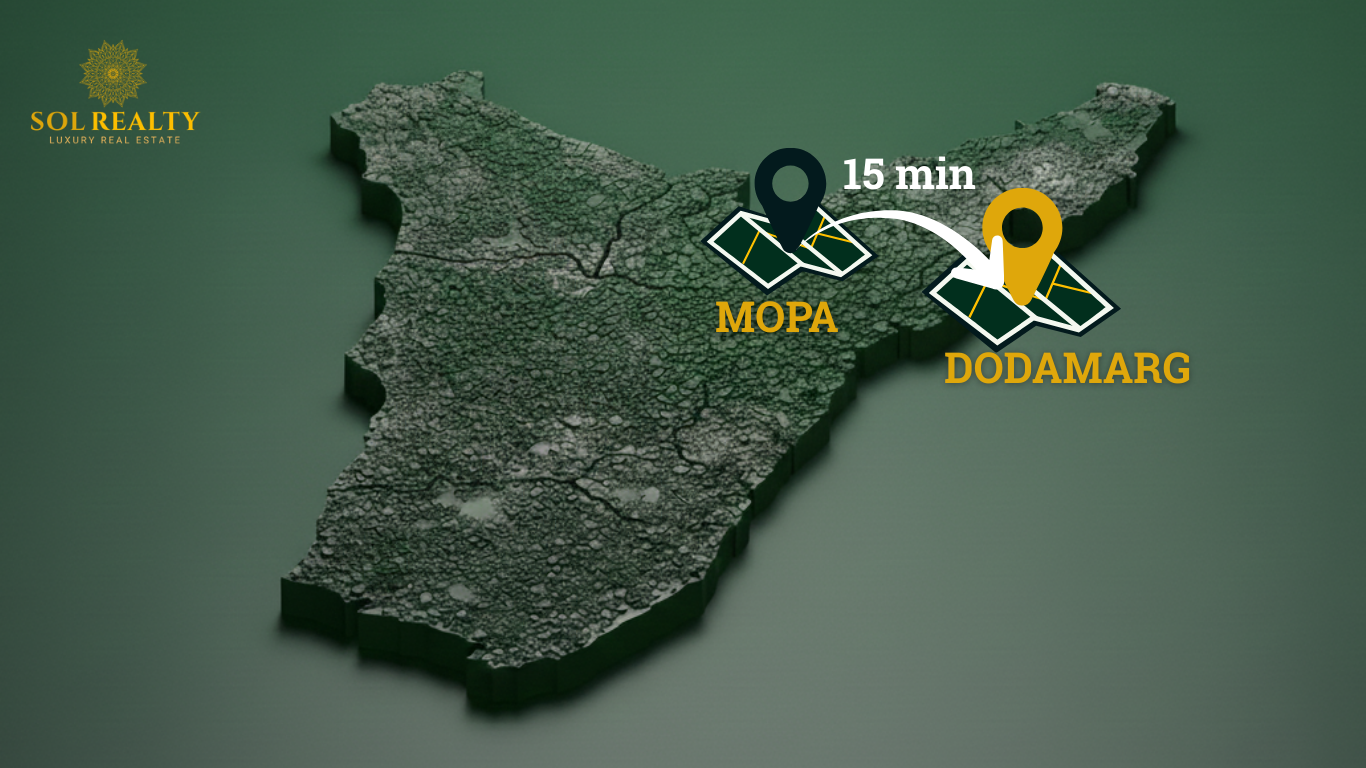
For the last decade, the Goa real estate story was simple: Buy a villa in Assagao, rent it out, and party in December. But the operationalization of the Manohar International Airport (Mopa) has fractured that narrative. The market has split. The “Old North” (Candolim, Calangute) is saturated. The “New North” (Pernem, Dodamarg, Sasoli)—what we call “Maha-Goa”—is where the alpha is being generated.
This report strips away the sales brochure fluff to give you the raw data on where The Future of Goa Real Estate Investment is actually heading in 2026.
1. The “Maha-Goa” Corridor: The New axis of Wealth
The Mopa Airport didn’t just add flights; it unlocked a landlocked geography. It turned the sleepy belt of Pernem and the Maharashtra border towns (Dodamarg/Sasoli) into a logistical and lifestyle goldmine.
Why the “New North” is Outperforming:
The Price Arbitrage: While a 335 sq. mt plot in Assagao now commands upwards of ₹5 Cr (approx. ₹1.2 Lakh/sq. mt), comparable land in the Mopa corridor—just 20 minutes away—is trading at 30-40% of that value.
The Infrastructure Multiplier: The 6-lane NH-66 expansion and the spur roads connecting Mopa to the Maharashtra border have reduced travel friction. You can now land at Mopa and be in your private estate in Sasoli in 15 minutes, bypassing the legendary traffic jams of Porvorim.
The “Casino Zone” Factor: With the proposed entertainment and casino zones shifting closer to the airport to decongest the Mandovi, early land bankers in this corridor are sitting on assets that could see commercial rezoning value spikes.
.
2. The 7% Rule: The Truth About Rental Yields
Let’s address the elephant in the room. Many brokers will promise you 15% ROI on a holiday home. They are lying.
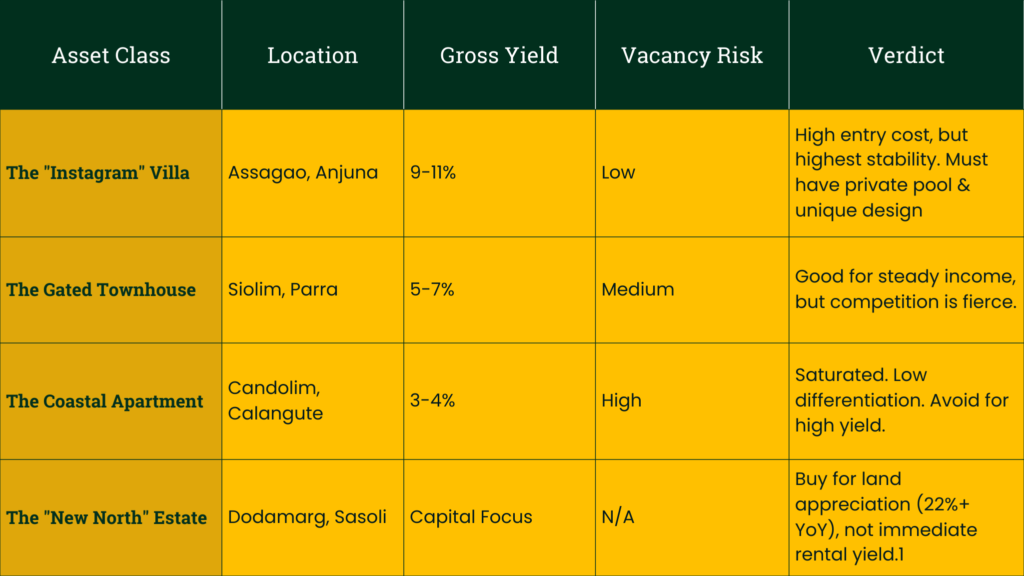
In 2026, the rental market has matured. Supply has increased. To achieve a net yield of even 7-9%, your property needs to be an “Asset,” not just a “House.”
The Sol Realty Yield Hierarchy (2025 Data)
The “Workation” Premium: Post-pandemic, the guest profile has shifted from “Weekend Partiers” to “Long-Stay CEOs.” Properties equipped with Starlink-level WiFi, ergonomic workstations, and 100% power backup are commanding a 20% premium on nightly rates. If your villa can’t host a Zoom call, you are losing money.
3. The Shift to “Conscious Luxury”
The 2026 buyer is bringing their eco-anxiety to Goa. They don’t want a glass box that requires 10 tons of AC cooling. They want Vernacular Luxury.
We are seeing a massive premium for:
Laterite Stone Construction: Naturally cools the home by 4-5°C.
Biophilic Design: Courtyards (Balcãos) that encourage cross-ventilation.
Water Security: Properties with independent wells or advanced rainwater harvesting systems are trading faster than those dependent solely on PWD water.
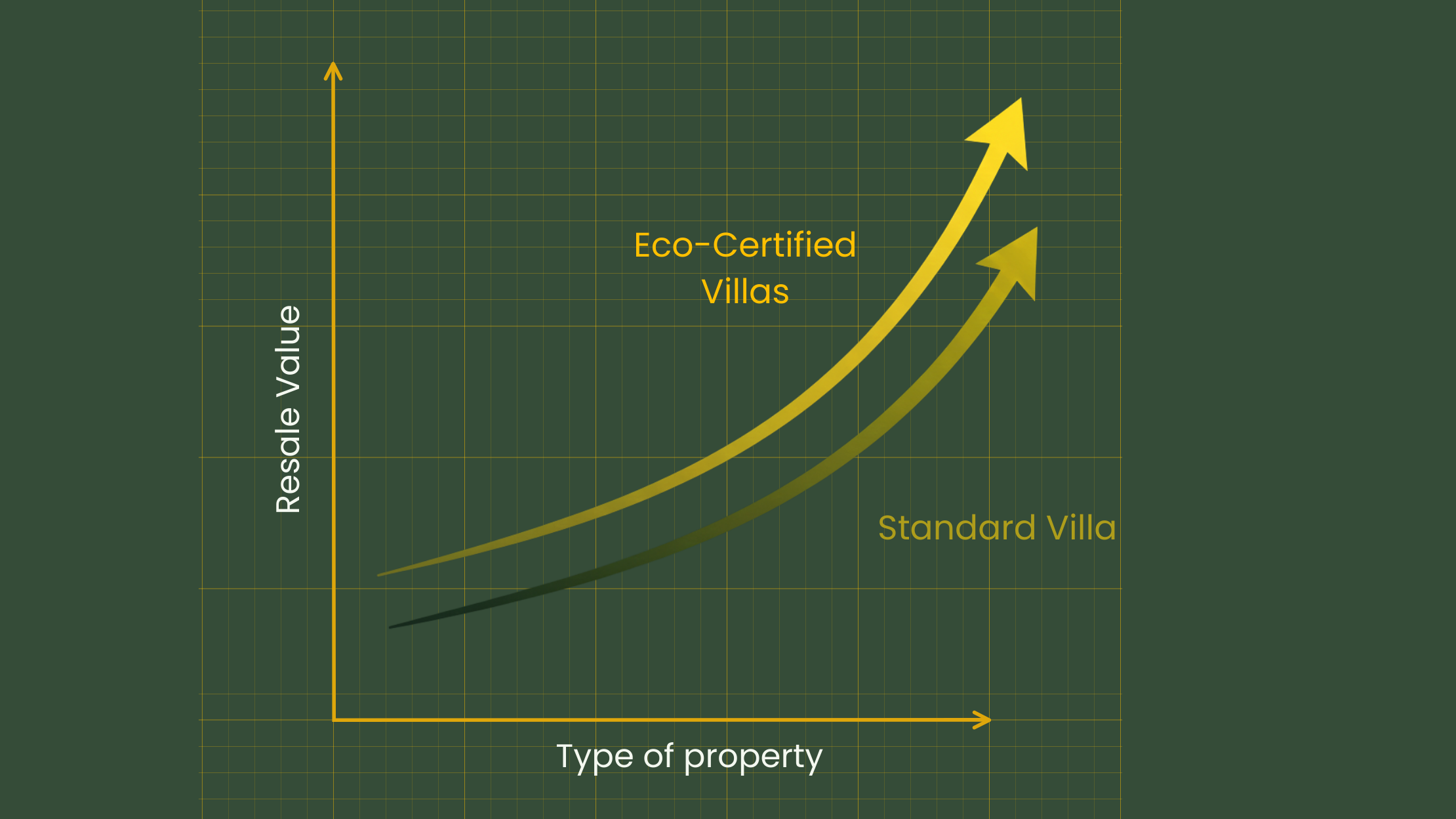
The Green Premium
4. Sol Realty’s Verdict: Buy, Sell, or Hold?
BUY: Land in the Mopa/Dodamarg corridor. The infrastructure tailwinds are just beginning.
BUY: Boutique, design-led villas in Assagao/Siolim if you plan to hold for 10+ years. Scarcity will drive value.
SELL: Old apartments in the Calangute belt. The yield is compressing, and maintenance costs are rising due to salt corrosion.
HOLD: Ancestral Portuguese homes. These are heritage art pieces; they aren’t making any more of them.
The Bottom Line: The “easy money” era of Goa real estate is over. The “smart money” era has begun. It requires data, diligence, and boots on the ground.
Thinking of investing in the New North? for a confidential consultation on off-market land parcels.